Showing posts with label Liberal Party of Canada. Show all posts

Wednesday, 24 August 2016

The Liberals and the #SummerOfScandals


Its a slow news day


This summer has taught us all a lot abut politics. Oh wait, that was another summer. This summer has taught us that even during the slowest political news seasons, there is still a lot that can go wrong.

First we learned Justin Trudeau, has difficulty keeping his shirt on when he’s not in Ottawa. While this itself was received in good spirits, there is an inevitable comparison to be drawn with a politician who was endlessly mocked for doing the same.
Image result for putin trudeau shirtless
(Shirtless leader of Canada Trudeau)
(Shirtless leader of Russia Vladimir Putin) 
I have no doubt that shirtless selfies will do more to hurt Trudeau’s credibility in the long run, but at the time they happened, there wasn’t much else in the way of scandals, leaving Liberal supporters to pop boners unabated country wide.

That was quick to change however. ( The lack of scandal not the boners)

Shortly after we  found out two things about Minster of Health Jane Phillipot. Firstly that Jane is probably the epitome of Liberal entitlement - spending ludicrous amounts on a car service owned by a Liberal supporter who worked for her campaign. Secondly we learned that Jane can’t tell a car from a limousine as her story changed practically daily after the story broke.

After that we had Minister of Environment and Climate Change Catherine McKenna spending more than most spend on there wedding photographer with a $6000 budget line for photographs taken while she was representing Canada at the Paris climate change talks.

What began to emerge after that was even more crazy spending from Liberal bureaucrats in Pairs. It became revealed that three individuals spent a total of $12,000 on food over 16 days in paris. The worst offender being Max Guenette, a senior communications bureaucrat in McKenna's department. Over his time in Paris he spent some $4,599 for food alone. This works out to about $288 a day

So what’s the conclusion to all this? Well maybe its a slow time for political news, maybe the honeymoon with the Liberals is over.

I’d prefer to believe however, that this crop of Liberals is just as entitled as all those who came before them. That’s why I’m choosing to ignore the possibility or reasonable explanations, and instead dub this the #SummerOfScandals.

Lets get this trending people!

Edit : Someone pointed out to me that I completely forgot Hunter Tootoo being kicked out of Cabinet after boning one of his staffers sorry folks but its hard to keep track of all the scandals !

Monday, 22 August 2016

Justin Trudeau and the Liberals need to buy a dictionary


The Liberal government have stated they intend to study the idea of creating exceptions to the Conservative parties controversial mandatory minimum sentences.

For those unfamiliar with the issue the former Conservative government passed a series of laws mandating jail time for offenders of certain crimes, such as:
selling a large volume of contraband tobacco, six months for distributing child pornography and five years for trafficking someone under age 18.
Although this sounds nice, much like the Liberal’s other nonsense consultations sounded nice (see my write ups on the Marijuana task force, and the Defence consultation review)the idea of studying “exceptions to mandatory minimum sentences”  is a completely contrary move. 

Without being pedantic, the legal definition of mandatory (as shown at the top of this article) does not permit an option to be disregarded or modified. So from a purely semantical point of view, to add a standardized set of exceptions to a mandatory law is ludicrous. The original law is no longer mandatory if it has exceptions, making a mockery of the entire definition.

There’s more problems with this plan aside from the semantics however. The first is the lack of study on the repercussions of the original Mandatory Minimum Sentences. The original intent of Mandatory Minimums was to take a “tough on crime” approach to reduce crime levels. Critics of the “tough on crime” approach state that it doesn’t work. However, without comprehensive study on the repercussions of enacting the Mandatory Minimums specifically in Canada there’s no objective way to determine whether being tough on crime reduces the rates. Not only does shifting the law make it impossible to study repercussions, it allows critics to subjectively say that the approach doesn't work. 

This relegates the debate over approaches to crime to purely subjective opinions. At best critics will form objective opinions using evidence from other countries, making their conclusions pretty inconclusive. At worst critics of tough on crime will baselessly critique the narrative reducing the overall debate on the issue to mud slinging.

The other major problem is how redundant this move is. The supreme court has already set precedent for exceptions to mandatory minimums. They have done it on two occasions. Without getting into the specifics of cases, the judges that overturned the rulings have created a situation where “ thousands of people each year will serve less time in jail”. 
The reason the Trudeau government is eyeing changes to Mandatory Minimums has a lot to do with PR. Justice minister Jody Wilson-Raybould has said:
“The government supports the use of mandatory minimum penalties for the most serious crimes, and crucially, only where they are consistent with the Charter.”
even though the Liberals support mandatory minimums, they don’t want to be put in a position where they have to defend a previous government's law. This is simply because there’s no benefit for them politically. 

If they successfully defend mandatory minimums they will appear like they support Conservative rhetoric on crime, blurring the crucial distinction between the parties that won the Liberals the election.

 If they unsuccessfully defend Mandatory Minimums the Supreme Court could force a review of the legislation creating a PR headache for a government who now has to craft legislation against something they support, while having lost a legal battle that would likely be in the publics eye. 

Unless the Liberals can present evidence regarding Mandatory Minimums one way or another, they are in for a lose lose situation of subjective politicking and lawmaking.

Thursday, 18 August 2016

Its not the thousand dollar limo ride...

Its about who owns the limo that drove Jane Philpott around

People love it when politicians spend crazy amounts of money on trivial things.

Er well rather, people love to complain about politicians who spend a lot of money on trivial things. This is one of the few areas where most people who follow Canadian politics can agree party doesn’t matter. Tory, Grit, NDP-er, regardless of who you vote for, when someone spends more than you do on a car ride, flight, or glass of juice it is an issue that demands outrage.

(A similarly expensive glass of  OJ, that was bought by a soccer player with limited controversy)
In 2011, then Minster of Development Bev Oda was widely criticized for upgrading her already high level accommodation, spending to much on transport, and in what became the keystone of the argument, spending $16 on a glass of orange juice. The most amusing thing about this in retrospect, is how Liberal Nova Scotian newspaper “The Chronicle Herald” described Ms. Oda’s other expensed line items:

“Oda needed some form of local transportation. As no ordinary London taxi should be used to ferry the well-heeled patrons of the Savoy, a limousine was chartered for the princely sum of nearly $1,000 a day.” 
“one only has to go back to 2006 when Oda was chastised for spending nearly $6,000 in just four days on a limousine service in Halifax while attending the Juno Awards.”
If you do the math, Bev Oda’s limo in London England was cheaper than Ms. Philpott’s Toronto limo, and Oda’s Halifax limo was about $1500 a day, or just shy of $200 more expensive than an afternoon in a limo touring the GTA.

Another example is from 2014, when former deputy leader of the NDP Megan Leslie was criticized for spending some $6,300 on a flight to Ottawa when a Conservative MP from the same area spent a hair over $1000.

While you can say what you want about the specific incidents, what is clear is that no party is immune from criticism over expenses. However there is something that the two previous examples lack, and that’s exactly what sets this case apart.

Jane Philpott’s case is different from other expense scandals. Its not just an issue of over spending, its a much more serious issue of backroom election promises. One would think after the Liberal sponsorship scandal that decimated the party ranks in the 2006 election that as a party they would be more careful about lining the pockets of Liberal supporters. Luckily for those who like to be outraged at politicians, the Liberals were not careful. Minister of Health Jane Philpott spent $1700 for a limo ride around the GTA and in an effort to repeatedly shoot their boss in the foot, Ms. Philpott’s office revealed this wasn't the worst line item from the minister’s finances.


However, it gets even worse. Remember when I mentioned the sponsorship scandal, well here's why I dropped that gem into the mix.
When Oda spent LESS on limos while touring England, but had the gaul to order pricey fruit juice, the Liberals called for her to step down. However when Jane Philpott spends outrageous amounts on a limo, that limo is owned by someone who worked to get her elected, and its proven the minister in question was aware of this, the Liberal’s reaction is… well nothing, so far.
Politicians are notorious for overspending, but thats only half the issue here. The Liberal party in Canada is notorious for giving money to their supporters. They promised they would end this sort of partisan spending, but clearly nothing has changed. 
Image result for Jacques Corriveau
(The expression of Jacques Corriveau after he realizes his career was tanked
in the wake of the sponsorship scandal, and nothing changed at party HQ)

Someone from the Liberal party needs to stand up and take the blame. Outrageous expense reports are one thing, returning to the days of Liberal sponsorship scandals, are another.

Wednesday, 3 August 2016

Trump Will Win

Canadians will be butt-hurt


Its funny to read an article that talks about how underestimating Trump is part of the reason he has made it so far, while in the same breath saying “Canadian’s marvel at circus of US election” i’m not referring to a specific article here or anything…

Its late in the election cycle and to anyone who takes the time to research will realize a Trump presidency is pretty much guaranteed at this point. Yet CBC continues to talk about increased fractures in the Republican party, and does an entire radio shows where they call a nominee for president, an asshole. No seriously, our national broadcaster, who are supposed to be objective in their reporting did an entire radio show about Trumps “psychology” and how much of an asshole he is. Here’s the description of the person they gave public radio time to, in order to make his “argument”
Aaron James, a professor and chair of philosophy at the University of California and author of Assholes: A Theory of Donald Trump, joins the conversation to argue Trump fits the profile of a prototypical "asshole." He has written extensively about the behavioural characteristics of assholes in his bestselling book Assholes: A Theory.
So this is what the journalism surrounding a leading candidate looks like. Sad really, and the fact that our tax dollars are paying for someone to call a leading American politician an asshole for 30+ minutes on public radio is even sadder.

So why do I think Trump will win? Well first of all, i’m not alone in this idea. Leading American pollster Nate Silver has predicted a Trump win - he has since changed his prediction (or rather his website “538” has taken more data into account) but I believe his prediction from July 25th to be one of the closest so far.
(A prediction that while interesting has far to much Blue for me)

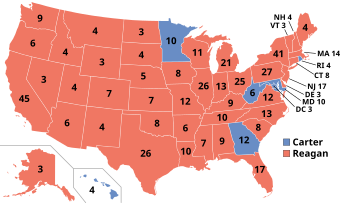
However this isn’t my prediction of how american will look after the election. I believe it will look a little more like this:
(The election map from the 1980 election of Ronald Reagan
changes I would make are minor, California likely won't go to Trump,
but this map is red enough for my tastes)


In my opinion, Trump is riding high on the same thing that caused the 2009 Orange Crush, the same factors that led to a yes vote for BREXIT, the same movement that frothed at the mouth shouting “stop Harper” while electing the second Trudeau PM. Trump's rise is part of the “anti-status quo” movement (a term of my own creation). In all the examples i’ve given, the vote that won, was the one that was against something. In the most successful examples, its the vote thats against the status quo.

There’s a lot of reasons why this is, and one of the biggest in my opinion is the human condition. Its a lot easier to convince people to get out and change something, if there is actually something to change. Take BREXIT, where to have won the “no” vote, politicians and pundits were tasked with convincing people to come out and vote to not change things. Why would you take time out of your day to turn up and vote for nothing. If you look at the last election in Canada, the voter turnout itself was what won the Liberal government an overwhelming majority. The other parties got less of the popular vote, but in many ridings, the candidate that lost got more votes than they ha in previous elections. Take the former deputy leader of the NDP Meagan Leslie, who lost her riding to political unknown Andy Fillmore. Ms. Leslie got  more votes than she had in the previous election, even though she lost. Mr. Fillmore (with help from Trudeau and co.) created a lot of new voters, thousands of them in fact. Why? Again, Leslie was the incumbent, the NDP didn’t do a good job of separating itself from the status quo, and with many people’s voting choice basically being a fuck you to the Harper status quo, Halifaxians (not sure of the demonym sorry Halifax) who hadn't voted came out in unpredictable numbers and voted against the status quo.

Think of it this way: its much easier to sell voting for a “change” , than voting to "change" something by electing the same person who previously held the position, ie an incumbent.

The American political system is broken, and it needs to be completely destroyed before it can be replaced. I strongly believe that Trump will get between 52-55% of the popular vote, because that’s how many Americans I believe think the system is broken.

No one cares that Hilary Clinton is a woman, she's played that out. Tipper Gore didn’t project Walter Mondale to a win, and she was the first female VP Candidate. Actually you know what, since i've already called upon the ghost of Reagan i'll go with that analogy.

Trump is the new Reagan, and Hilary Clinton is Walter Mondale. Which makes Tim Kaine... Tipper Gore.
Image result for tim kaineImage result for tipper gore

Wednesday, 13 July 2016

Don't let Canadians vote on how to vote - PT II

Unless they're First Nations. 

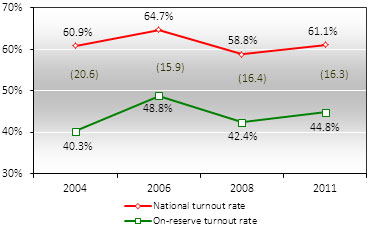
Its not secret that Canada and ever other western nation, has a pretty shit record when it comes to their first nations peoples. From years of abuse and assimilation, to outright genocide, political leaders have rarely been able to say they represented First Nation’s rights. Unsurprisingly voter turnout from Canadian first nations has been significantly lower than national averages. 

In Canada’s last election there was a massive uptick in First Nations voter turnout. Although some say this was anger at the Harper goverment, PM Trudeau none the less enjoyed the support. In turn, once he took often, Mr. Trudeau made it clear First Nations issues were one of the primary mandates for all of his ministers. He said While this move seems positive at a glance, it comes with a caveat. First Nations issues are not always Canadian issues, and Canadian issues are not always first nations issues. While its noble for Trudeau to mandate all of his Ministers to consider First Nations issues as Canadian issues, in many ways the issues conflict. For instance, pipelines. Without a doubt pipelines are the safest way to transport oil across Canada. By not building them we commit to transporting oil by rail, which as any resident of Lac-Mégantic will tell you, has tragic consequences. However because of the potential environmental consequences, and a plethora of other reasons, first nations support for pipelines is rare, and has been criticized for not being genuine even when it does occur. So it would seem theres an ideological divide between what is good for Canadians and what is good for First Nations. 
What happens in cases where the issue at hand is relevant to First Nations is whichever group yells the loudest, has the best lobbyists, or gets their point across to people who matter gets their way, with little thought to compromise. More often than not this is the “white” opinion. Leaving First Nations with little voice, and a serious alienation from our democratic system. 

Leaving measurable percentages of the population alienated and without their own voice isn’t the way modern democracies function. Meaningful representation can reverse this, and it can help get Canada started on electoral reform, without throwing out the baby with the commons bathwater.  

I believe that we can add an element of promotional representation to Canada’s democracy, give First Nations peoples a powerful voice in the commons, and we can do this without modifying existing seats or riding boundaries. We can do this all simply, by adding about 14 seats determined proportionately, that are reserved for First Nations MPs - BUT - only if First Nations peoples (whom I obviously do not claim to speak for) want it.

Canada should allow First Nations people the right of self determination for meaningful and unique representation. First nations people should be able vote in a binding referendum on whether they should have the option to be represented in (by my calculation) some 14 ridings overlapping the current boundaries of current ridings. Trudeau has said he wants to empower First Nations, and also said he will reform the electorate - this is how.

(Folk art of a Maori man riding, a whale which is largely unrelated
to the special electorate districts created over a century ago but none
the less sounds phonetically similar )
The system I envision would work similarly to that of New Zealand who have employed a system of Maori reserved ridings the late 1800’s. In modern times this means that the number of people who register on the “Maori” electorate (people have the choice to register on the “general” roll as well) vote for Candidates in much geographically larger areas. MPs can represent their issues well and have the support of parties formed specifically for the Maori electorate and for Maori issues. New Zealand’s system hasn't been without criticisms, but it has certainly given a voice to that countries indigenous peoples by forcing members of “general” electorate to negotiate with Maori parties and MP’s especially when minority governments are sitting. 

A tweak I would make would be to have the number of seats flexible (similar to Germany’s variable commons seats) based on what percentage of First Nations choose to vote in special ridings versus vote on the general roll.

I may be on the Political right, but I firmly believe everyone deserves representation. The representation First Nations people currently have is at best diluted into the wider community by virtue of riding size. With a couple of minor exceptions, there are not many ridings in Canada with close to 50% First nations people, and with exception to pale mandates like the one PM Trudeau gave, First Nation  issues are rarely completely in sync with Canadian issues. That’s ok though, actually its great because as i’ve said previously, allowing Canadians to vote on electoral reform with likely cause a cluster-fun. However, allowing - as a sort of pilot project - First Nations peoples to gain proportional, and meaningful representation by creating a number of new seats - all without shaking the foundations of are democracy just to see what happens. 

Monday, 11 July 2016

Don’t let Canadians vote on how to vote

A referendum is the worst route towards electoral reform 

There’s a very relevant quote from a British political figure with which i’m gong to start this article, 

“The best argument against democracy is a five-minute conversation with the average voter.” 
 Now before you judge this quote remember it was said by a Nobel literature prize winner, a great military victor, Britain’s most popular PM, and the namesake to a absurdly large cigar size. Who is this i’m referring to ? My personal portly hero, Winston Churchill.


Image result for Winston Churchill
(likely the most popular politician to be openly contemptuous towards his constituents)
Jokes aside, I honestly believe having a referendum over reforming our current First Past the Post (FPP) voting system spells disaster for Canada. There are a couple basic reasons why I believe this. Firstly Canadians, and people in general lack the knowledge and education to understand the foundations of our system. Ask about someones vote and a surprising amount of people will say the leader of their party’s name - showing a fundamental misunderstanding of Canada’s “leadership race” which technically is a closed event limited to the respective party members. Although most Canadians think its “bad”, I wonder how many understand the senate is an unelected body, and that at its creation there was good reason for this (protecting the more affluent against mob mentalities). How many Canadians really understand the first past the post, majoritarian system we employ. The Liberals has insisted they will change the system and ensure the election that gave them the freedom to do so will be Canada’s last FPP election. While I would normally hope even if they didn’t know the issue in depth, Canadians would make an intelligent choice,  it appears that in 2016 rational decision making has been replaced with being contrary. Phenomenons like BREXIT and Donald Trump’s rise to power forming, are examples of anti status quo decisions. Voters across the world are unpredictable, and seemingly the only thing that rings consistent is the rejection of the status quo. Lastly, I believe changing our system so dramatically in one move, may result in very few majority governments in Canada’s future.

The most compelling piece of evidence that Canadians have a flawed understanding of our political system lies in the rationale behind strategic voting. The idea of the movement being: vote for the party most likely to beat the party you don’t like. Not only does this distort the political opinions of various regions, but it takes away the freedom of political choice. If a government is portrayed as so poor that citizens are convinced of a need to give up their individual right to choose. Instead they act for the greater good and defeat the “poor” candidate. The fact that people willingly follow this ideology is absurd in a democracy. I agree our system isn't perfect, but it doesn’t speak to the quality of the system when seemingly organically groups form to strip Canadians of their right to vote, telling them its better for all. This relates to a referendum on a new method because in my mind, if Canadians can be so easily manipulated into thinking strategic voting isn’t anti-democratic, think what they can be convinced of in terms of voting systems. 

The contrary nature of the modern electorate is another good reason Canadians shouldn't hold Canadians future in their hands. Currently their is a serious anti status quo movement erupting around the globe. Leaving confused pollsters, and independent England’s in its wake. It would the landslide defeat of the Conservatives might have been an early indicator. Whatever the symptom the underlying cause is hard to determine. Is it easier to market change versus staying the same? Is it harder to vote for nothing happening (i.e. maintaining the status quo) than it used to be? Are people world over tired of the same old leaders and really just want some fresh faces? Is change become synonymous with progress? I wish i had a good answer, but i don’t. For little to no identifiable reason, large decisions world over seem more and more to be rejecting whatever the status quo may be. What this means for a referendum on voting is that Canadians are likely to choose the option furthest from the current system, with little to no real thought about its merits. 

The last point i’ll make in this plea is to look at our peers. Many countries have shifted from FPP to a variety of more modern systems. Some of these countries like Belgium have similar dichotomous ethnolinguistic makeups. What happens when these countries shift to Proportional Representation? Massive gridlock erupted in 2007 with talk of devolving powers. The country has had a list style PR since the early 1900’s. However its ethnolinguistic issues were largely dormant. Upon becoming salient again, the parliament split, and meaningful government couldn't be formed from 2007-2011. Canada may have enough factions or groups to make this effect less extreme, but that seems less than likely as the french english , and east west divide have been plaguing us for many decades. More than likely any quick change of political system is likely to force people to return to linguistic, ethnic, or regional divides. If there isn’t enough divides, or there become two major unifiers, this usually leads to incapable gridlock.


So in short. Please don’t let Canadians, myself included, have anything to do with choosing the new way in which we vote. We don’t understand it well enough to choose, were likely to just choose the option thats the most different, and even if we have nothing to do with the change, we’ll probably let the old english vs french Canada divide screw everything up anyway. How do I think it should be done ? Stay tuned, that’s a another article, and hint, it involves New Zealand.

Saturday, 2 July 2016

Liberal Marijuana task force roundup

The good - and the mostly negative 

Ottawa announced yesterday they were announcing the members of their task force to legalize Marijuana. From reading the comments around the internet, it seems as most didn’t find this announcement to be substantial. However, within this announcement there does lie some pretty solid information. This article will break down some of the positive points of the task force, but it will more importantly focus on a few areas the task force seems to have made up their mind on, and taken entirely the wrong side on.

Firstly, lets talk about the good. The people who have been picked for the panel seem to be a pretty balanced, and qualified bunch. Here’s a quick sum up of them from reddit user /u/supervillainO_o

  • Dr. Mark A Ware (Vice Chair).
    • Ware, who grew up in Jamaica and is now a Canadian-based world-renowned expert on cannabis use for pain.
  • Dr. Susan Boyd.
    • Susan Boyd teaches courses on drug law and policy, theory and research methodology. Her research interests include drug law and policy, maternal-state conflicts, film and print media representations, women in conflict with the law and research methodology. She is a community activist who works with harm reduction and anti-drug war groups.
  • George Chow. 
    • Vancouver City Councillor
  • Marlene Jesso -
    • superintendent of the RNC, Royal Newfoundland Constabulary
  • Dr. Perry Kendall. -- 
    • As provincal health officer in BC and oversaw "insite" safe injection sites established (wiki)
  • Rafik Souccar.
    • Mr. Souccar was a Deputy Commissioner of the Royal Canadian Mounted Police (RCMP) from 2008 to 2011, an Assistant Commissioner of Federal and International Operations from 2005 to 2008, and Chief Superintendent and Director General of Drugs & Organized Crime from 2002 to 2005. He has been a Director of Canadian Air Transport Security Authority since June 2015. He is a member of the Canadian Association of Chiefs of Police, the Law Society of Upper Canada, the International Bar Association and the American Society for Industrial Security
  • Dr. Barbara von Tigerstrom.
    • she worked at the Supreme Court of Canada, the University of Alberta Health Law Institute, and the University of Canterbury School of Law. She holds a PhD in law from the University of Cambridge. Professor von Tigerstrom’s main areas of teaching and research are health law, public health law and policy, food and drug regulation, and tort law.
  • ​Dr. Catherine Zahn.
    • Dr. Zahn was appointed President and CEO of the Centre for Addiction and Mental Health (CAMH) in 2009

This seems like a pretty solid bunch. Lots of legal minds, people who have been in the law enforcement fields, activists for marijuana, as well as academics well versed in various areas of marijuana research. They also have Dr. Barbara von Tigerstorm who has one of the most bad ass names i think i’ve ever heard. This is all good news, but after reading through the governments extensive document of the commissions mandate there appears to still be remnants of hardliners like Bill Blair. 

Blair, former top cop for Toronto has been strongly against Canadians having the right to grow their own marijuana. Blair has been inundated by his long time friends and lobbyists to restrict growing the only big business, creating a virtual monopoly on the product. This would be similar to the stringent regulations formerly on alcohol production that are only now being challenged as the public demands more local, and craft/small brew beers. To reverse this ideology from the get go and create massive corporate bodies controlling marijuana, is anti free market, and reeks of the patronage previous Liberal governments got in trouble over. The reasoning is also flawed, in the areas where marijuana has already been legalized, there has not been a massive expansion in home growing. Growing marijuana at home is hard, time consuming work, and often nets far less than most imagine. Not only this but running the sort of light that produce decent marijuana is a massive investment initially, and increases power bills massively. This is why people don’t really tend to do it very much, after all tobacco has been legal to grow for personal use in Canada for some time. 

There are websites dedicated to growing your own cheap tobacco, but no one really cares. Home brewing hasn’t started a massive rise in dangerous alcohol on the streets, or kitchen still explosions. Producing beer, liquor, wine, tobacco (up to 15kg of dried tobacco per person) part 3 - number 3 section ii), or marijuana at home are all difficult time consuming hobbies, which nicely keeps them from ever expanding to a point where they pose a public risk. Blair being the top man on pot, while having friends who lobby for the biggest corporate growers in the country, is a pretty gross conflict on interest, especially considering the misinformation regarding the dangers. This is why I am glad to see Mr.Blairs omission from this new panel and consider it good news. That being said there still seems to be some hesitance leftover from his time as pot czar, for home growing, which I hope this more educated panel will move past. 

There is another negative to the information the government has so far put forward. As well as being sceptical of home growing, there is serous language implying a dislike for high THC content products, knows generally as concentrates (shatter, wax, oil, honey etc are grouped under the general term “concentrates), and a hesitancy to allow their sale at all. There are a couple of reasons I feel this is in direct contrast to the aim of the commission, which is harm reduction methods. 

Firstly, there is misinformation surrounding high potency marijuana products is not based in reason. There have never been any example of a THC overdose, and limited study to the half-life of active THC (ie that THC that effects decision making etc) so suggestions that higher potency marijuana being consumed is more dangerous are unlikely to prove true. Furthermore the manner, of consumption dictates that smoking large amounts of marijuana concentrates is difficult, and its dangers physically are non existent as a result. The price to produce concentrates also set their price high, making it unlikely consumers will purchase large amounts when compared to herbal marijuana. 

The most important thing missing from the report is any mention of price setting to combat organized crime profits.

Take Uruguay's model, a country that fully legalized marijuana in 2014, set the state controlled price for pot at $1 a gram to ensure it would not be a profitable crop for those in the illicit market, even if it meant slower profits at first for legal growers. I believe Canada should mimic this model and set the price of marijuana low enough that there is little to no incentive for organized crime to produce marijuana in the large scale. This is crucial to keeping the drug out of the hands of youth, one of the main justifications for the move from the liberals. Illegal retailers do not check ID's, but regulated sellers will - taking away the profit takes away the incentive for anyone to produce and supply the black market. Setting the price at half, or less of the current street price of $10 a gram is imperative for minimizing the harm of use to Canadians, and language suggesting this is the plan is entirely missing from this report. 

So there’s my take. We get some positives with the choice of committee members, Chair Anne Maclellan absent from the above list, but her record is well known. Another positive with the exclusion of Bill Blair, even if we get a negative with the remnants of his un-based opinions surrounding home growing. However, we then get into the real negatives in the form of misinformation around marijuana concentrates, and no information around, price setting. 

So all in all a mixed bag, The Liberals have made their second real move in the road to Legalization and although there are some serious negatives, hope is not lost among a few gleams of positive hope. 

Tuesday, 28 June 2016

The Saudi’s will get their arms, the Liberals will keep it quiet


the Germans will help? This writer also has questions about the security of the shipment


In a first for what is a very young blog, I have managed to get my hands on a piece of news to break. Quiet from any public release it would appear the Liberals have begun shipping the controversial Light Armoured Vehicle or LAV to Saudi Arabia.
(A diagram of the General Dynamics LAV - this diagram
gives little doubt as to the cargo of the trucks spotted)

Recently departed from Halifax is the Saudi flagged vessel “BAHRI TABUK” a Ro-Ro container ship (meaning roll on and roll off loading) that was loading yesterday on the Bedford Basin pier. This vessel is headed for the port of Bremerhaven Germany, a city that could be a port of call for the ship, or it could act as a transportation hub as the German city carries a great deal of heavy freight including cars, containers, and food. This also means that if the vessel does not continue on to Saudi Arabia, it is likely the German government is complicit in shipping Canadian arms to their Saudi buyers, a revelation that was previously unknown.

What makes this vessels stop in Halifax noteworthy is early this morning, just after 7am at least two transport trucks with Ontario plates, carrying what was clearly four of the new General Dynamics LAV were spotted traveling toward the Bedford basin shipping pier, where only one ship, the Bahri Tabuk was docked. 


(Shot of the first truck)


(Shot of the second truck)

With no announcement one can only assume the Liberals hoped this transport would go un-noticed, although with this being said, there is not much obscuring the highly controversial LAV from view. Secrecy aside, here’s where it gets even worse. These highly sophisticated pieces of military hardware, were barely covered and had no visible security as is obvious from the above pictures. Not only are we shipping LAVs to a country who may use them for questionable purposes, but we aren't even being that careful while doing it. 

These transport trucks have presumably traveled from the General Dynamics factory located in Ottawa with little more than the turret obscured by plastic wrap. These vehicles, could have easily been tampered traveled across some 1,400 km and this careless transport of controversial and dangerous military hardware should not be taken lightly. If you don't think damage is possible let me remind you that in 2011, US military hardware was damaged by an anti-war protestor while stoping over in Ireland. The protestor that attacked the aircraft at Shannon Airport and had to breech far more security than was afforded to these LAVs, so in my mind its very plausible that something could have happened to this shipment, or could happen to future deliveries. 

Though the photos are not clear, the person who sent them to this blog said there were “arabic looking letters” along the side of the vehicles, meaning presumably those operating them would be speaking this language. Further, these appear to be the exact design that General Dynamics would be producing , giving leave to any doubt that this is the controversial shipment covered endlessly in the Canadian press.


With the Liberals lack of coherent defence policy its not a surprise to me they continued with the move to sell LAVs to the Saudis. They had much to lose from canceling the deal, and other defence policy wedge issues like Single Surface Combatant vessels, and the F-35s that are that they can be public about. What is surprising to me, is the lack of security surrounding the transport of what is arguably the most controversial arms sale in recent memory.


Here are some additional pictures taken of the LAVs in transit.